The No-Deadline Rule That's Quietly Repricing Land in Waterway Palms Plantation
September 3, 2026
September 3, 2026
What does it actually cost you when a gated community tells you there's no rush to build?
That question matters more in Waterway Palms Plantation than in almost any other gated Intracoastal neighborhood in Carolina Forest, because the answer isn't zero. It's measured in what a vacant lot costs today compared to what the same lot cost the last time someone was patient enough to sit on it. Buyers scanning listings for "custom home" and "no deadline to build" tend to read those phrases as pure flexibility. They're actually describing a set of rules that shapes both what you're allowed to construct and how much the dirt under it is worth by the time you're ready to break ground.
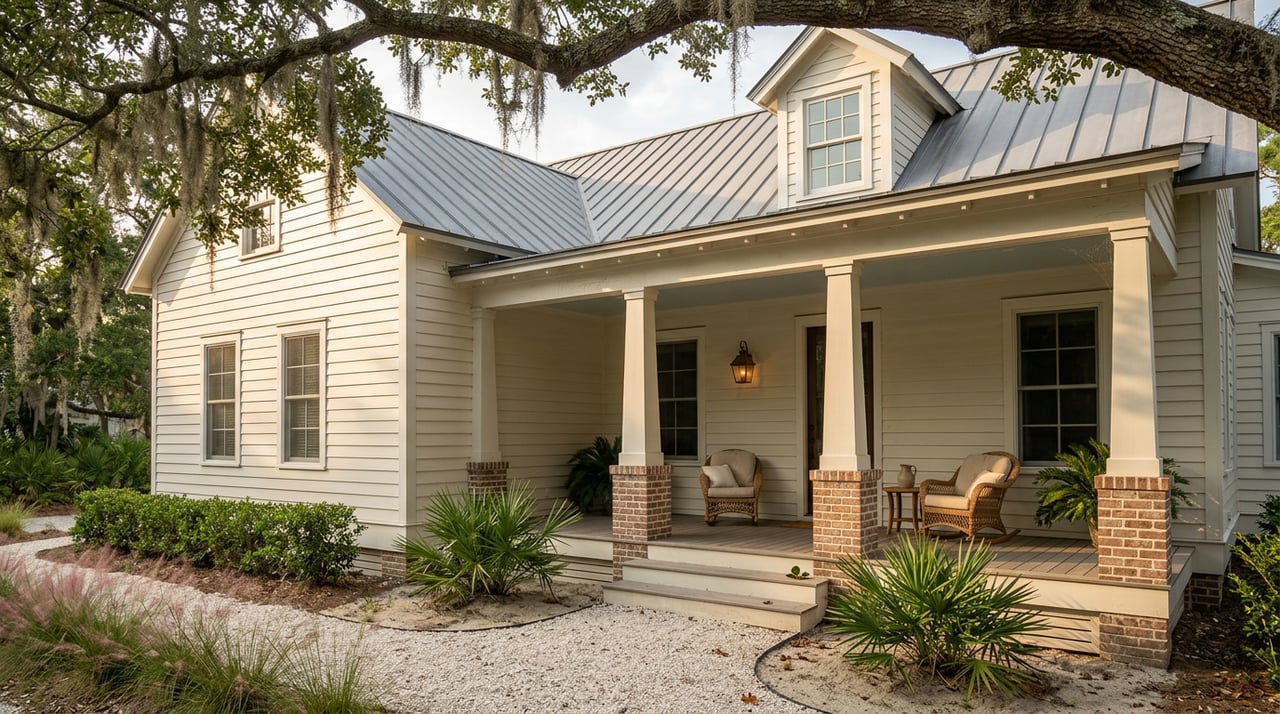
Waterway Palms Plantation markets itself around a Charleston sensibility, and the branding isn't wrong so much as incomplete. The community's architectural review requires that every custom home fall into one of exactly two approved styles. The first is the Charleston row house: narrow, two or three stories, with courtyards, wrought-iron railings, and trellised balconies borrowed from the Battery district. The second is Low Country: wider, one or two stories, more horizontal, still formal but built to a different proportion. There's also a minimum square footage requirement attached to preserve the community's scale, though the exact figure isn't published the way it is in some neighboring developments.
That's a meaningfully tighter box than "custom" usually implies. A buyer picturing a modern coastal build, a farmhouse silhouette, or a Mediterranean stucco exterior is picturing something the architectural review committee here won't approve, even though all three styles show up elsewhere in Carolina Forest. This isn't a design suggestion. It's a covenant, and it's the reason every home in the neighborhood looks like it belongs to one of two families, no matter which builder poured the foundation.
The upside is real: the two-style rule is exactly what keeps the streetscape coherent as new construction fills in the remaining lots, and it's part of why the resale market treats this neighborhood as a single, recognizable product rather than a grab bag of individual builder tastes. The tradeoff is that if your vision doesn't fit either box, this isn't your community, and no amount of lot-buying will change that.
The other half of the pitch is that lots here come with no construction deadline. You can buy raw land and simply hold it, no builder required, no clock running. Framed as buyer freedom, that's true. Framed as a market mechanism, it's the reason land here has quietly become an appreciating asset in its own right, separate from whatever gets built on it eventually.
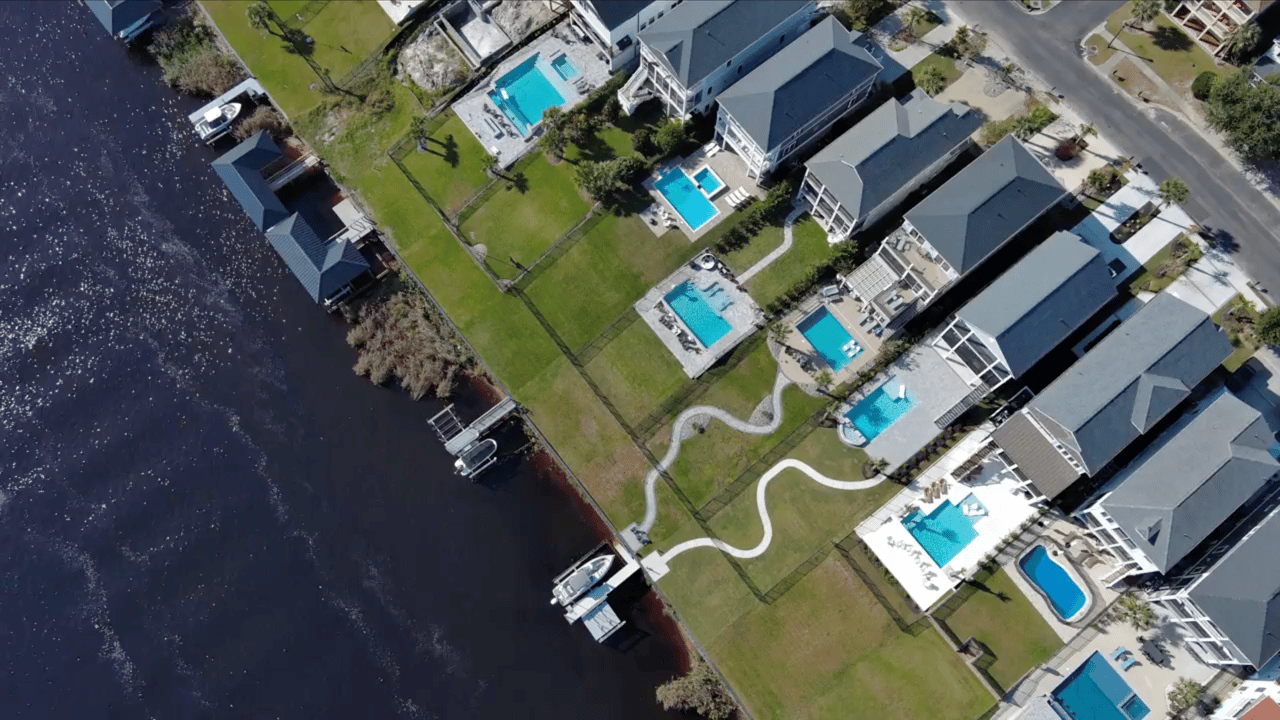
Older listing pages for the community describe vacant lots priced in the $30,000 to $60,000 range, back when the neighborhood was still filling in and land was closer to raw inventory than a scarce resource. That figure is no longer close to current reality. As of 2026, individual vacant lots in Waterway Palms Plantation are listing anywhere from roughly $130,000 to $380,000 depending on position, whether they back up to the lake, and whether they offer direct Intracoastal frontage. Finished custom homes in the same community span a wide range too, with listings this year running from the high $500,000s for smaller or older builds up to $1,475,000 for larger waterfront residences.
Category | Historical range | 2026 range |
|---|---|---|
Vacant interior/waterview lots | roughly $30,000 to $60,000 | roughly $130,000 to $380,000 |
Finished custom homes | mid-$300,000s (community's early build-out years) | roughly $587,500 to $1,475,000 |
That spread on land alone tells you something the marketing copy never says directly. A no-deadline policy doesn't just let a buyer wait. It lets an entire community's worth of buyers wait, which means some of today's "new" lot listings are really long-held parcels finally coming back to market at a price that reflects over a decade of the neighborhood filling in around them, not the raw value of an empty rectangle of land. If you're shopping lots here in the fall of 2026, you're not bidding against undeveloped dirt. You're bidding against somebody else's patience, and patience has been pricing in nicely for years.
It helps to see the contrast next door. Carolina Waterway Plantation, a separate gated Intracoastal community also inside Carolina Forest, sets a documented 1,600 square foot minimum for new construction and leaves the architectural style open. No Charleston-or-Low-Country mandate, no committee steering you toward one of two silhouettes. Homes there range from Mediterranean stucco to traditional brick to shiplap-sided cottages, all coexisting on the same streets.
Both communities sit on the Intracoastal. Both are gated. Both get described in listing copy as premier, prestigious, and sought after, which are words that tell you almost nothing about what you're actually allowed to build. The difference that matters is the covenant, and it's the kind of detail that only shows up once you've asked to see the architectural guidelines rather than the amenity list. A buyer who assumes all Carolina Forest ICW communities operate the same way risks falling for a lot in the wrong neighborhood for the house they actually want to build.
If a Waterway Palms Plantation lot is on your list, the practical order of operations should run backward from how most listings present it. Amenities and views are the easy part to evaluate. The harder, more consequential questions are architectural: does your preferred floor plan fit within the Charleston or Low Country envelope, is your builder already familiar with the community's review process, and what's the realistic timeline for plan approval once you submit. None of that shows up in a listing photo, and all of it determines whether the lot you're excited about will actually let you build the home you're picturing.
Price the lot itself for what it is: land that has been quietly compounding in value because nobody was forced to build on it. That's different from land in a community with a hard construction deadline, where lot prices tend to track more closely with raw buildable value because holding costs eventually force a decision. Here, the absence of a deadline is itself priced in, and buyers who skip that step risk anchoring to outdated lot prices they saw referenced somewhere online, prices that reflect the neighborhood's earlier build-out years rather than where it stands today.
Can I build something other than Charleston or Low Country style in Waterway Palms Plantation? No. The architectural review process approves only those two styles, and a design outside that framework won't clear review regardless of budget or builder reputation.
Is the no-deadline policy still accurate for lots being sold today? Multiple current listings for the community continue to advertise no time restriction on when construction must begin, so this remains a feature of lot ownership here as of 2026.
Does the neighboring Carolina Waterway Plantation have the same architectural rules? No. That community sets a 1,600 square foot minimum for new construction but does not restrict style, which is why its streets show more architectural variety than Waterway Palms Plantation's two-style pattern.
If you're weighing a lot purchase here against a finished home, or trying to figure out whether a Charleston-style build or a Low Country plan actually fits your family's needs, that's exactly the kind of decision worth talking through before you're emotionally attached to a specific parcel. Megan Parker has walked buyers through Carolina Forest's Intracoastal communities long enough to know which covenants are worth reading twice. Let's Connect.

Events
From buying and selling to real estate investing, Megan Parker delivers trusted guidance, local market expertise, and personalized solutions tailored to your goals. Her client-focused approach ensures a smooth, successful experience at every stage of your real estate journey.