How to Own a Golf Cart in South Carolina in 2026: The $5 Permit Is the Easy Part
November 12, 2026
November 12, 2026
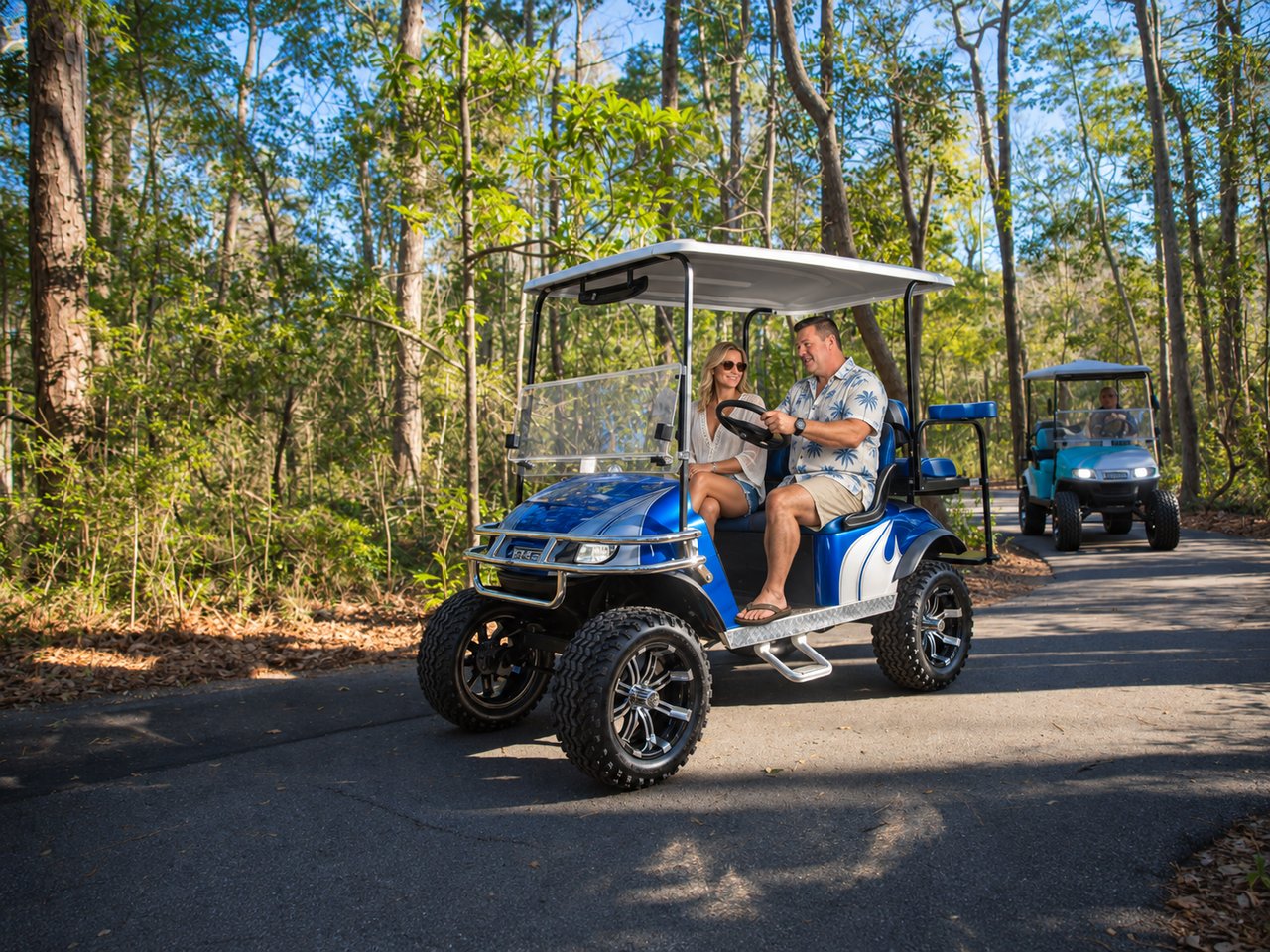
Pull up to the beach access at the end of almost any avenue on the Grand Strand and count the golf carts. Then count the ones with a current state decal.
Most write ups about owning a cart here still point you to Section 56-2-105 of the South Carolina Code. That section was repealed on May 22, 2025. The law that replaced it, Section 56-2-90, was amended again on May 18, 2026.
That gap matters. The old rule was one statewide answer. The current one is a state baseline plus whatever your city or town has voted on since, and along this coast those votes did not all go the same way. If a cart is part of how you picture using a house here, the rules are part of the house.
Under Section 56-2-90, a cart driven on a public road needs a permit decal and a registration certificate from the South Carolina Department of Motor Vehicles. The statute asks the owner for proof of ownership, proof of liability insurance, and a $5 fee.
The application is SCDMV Form GC-2, revised May 2026. It asks for the cart's make and year, a vehicle identification number if the cart has one, your driver's license number, the name of your insurance company, and a signed statement that the cart is insured and will stay insured. You can hand it in at any SCDMV branch or mail it to SCDMV, Titles and Registration, PO Box 1498, Blythewood, SC 29016.
The decal goes on the cart. The registration rides in it.
The decal has to be replaced every five years or when you change your address, whichever comes first. The address trigger is the one people miss after a move, so if you just closed, add it to your after closing checklist. Per the form, a replacement decal is $5 and a replacement registration is $1.
The statute requires proof of liability insurance that meets Section 38-77-140, the same section of state law that governs minimum liability coverage for vehicles on South Carolina roads. The driver has to carry that proof, along with the registration certificate and a driver's license, any time the cart is on a public road.
The limits and the premium are questions for your insurance professional. So is whether a homeowner's policy covers the cart once it leaves your lot. Don't assume it does. Ask for the answer in writing.
The operator has to be at least 16 and hold a valid driver's license. A learner riding with an adult doesn't meet that.
Every passenger under 12 has to wear a fastened seat belt when the cart is on a public street or highway. The 2026 amendment carved out one exception, for carts owned by a golf course and used for golf on that course. If your cart has no belts and you carry children under 12, that's an installation before it's a ride.
Where no local ordinance exists, the statute's default applies. A permitted cart may run only during daylight hours, only on secondary highways posted at 35 miles per hour or less, and only within four miles of the address on the registration. It may cross a faster highway at an intersection. It may not travel along one.
Since May 2025, a city, or a county for its unincorporated areas, can set its own hours and locations and can allow night driving for carts with working headlights and taillights. The 35 mile per hour cap stays either way. Here is what's on the record along the Grand Strand.
Place | What the record says | Source and date |
|---|---|---|
Sunrise to sunset. The city ordinance carries a fine of $100, up to 30 days in jail, or both. Council heard a resident request in May 2026 to allow night driving. | City news release, June 24, 2025. WMBF, May 20, 2026. | |
Any hour for carts with working headlights and taillights. Carts without lights stay off the road from 30 minutes after sunset to 30 minutes before sunrise. | Town Council second reading, August 26, 2025, passed 5 to 2. | |
Conway | 6 a.m. to 11 p.m., with certain roads excluded. | City Council final approval, August 4, 2025. |
City of Myrtle Beach | Daylight hours only. The city said it was reviewing its ordinance. | City notice, June 25, 2025. |
Unincorporated Horry County | No county golf cart ordinance, so the state default applies. | County spokesperson, reported by The Sun News, October 2025. |
Councils keep voting on this. Before you rely on any row above, read the current ordinance on the city or town's own site.
Same cart, same decal, different curfew depending on the town line.
Here is the line almost nobody quotes. If the address on your registration sits inside a gated community, the statute measures the four miles from the community's point of ingress and egress, not from your driveway. For a house set deep inside a large community, that changes what's in range.
Compare that with a house on a public street inside town limits, where the town's ordinance sets the hours and the four miles run from the front door. Some towns add their own layer on top. The Town of Pawleys Island, for one, runs its own 2026 golf cart permit application and asks for your state registration to complete it.
Section 56-2-90 governs public highways. What a community allows on its own private roads is set by its covenants and rules, and that is a separate document to read before you close.
One more contrast. A low speed vehicle is a different class under state law. It is registered and plated through the SCDMV, has to meet federal safety standards, and isn't held to golf cart hours. If driving after dark is the point, settle which one you're buying before you buy it.
One gap worth naming. How a county treats a golf cart for personal property tax isn't spelled out on the SCDMV's golf cart page, so ask the Horry or Georgetown County Auditor before you budget for it. If you're sorting out the rest of your tax picture, start with the Horry County 4% application.
And if the cart route is part of the search, start with the map and work outward from the water.
Yes, if it is going on a public road. South Carolina Code Section 56-2-90 requires a permit decal and registration certificate from the SCDMV, which takes proof of ownership, proof of liability insurance, and a $5 fee. The decal must be replaced every five years or when your address changes. The driver must be at least 16 with a valid driver's license, and local hours vary by city, so check your town's ordinance.
Checked November 12, 2026. This is general information, not legal or insurance advice. Confirm current rules with the SCDMV, your city or town, and your insurance professional.
Megan Parker grew up on the Grand Strand and knows which questions to ask about a house before the cart ever leaves the garage. Let's Connect.
Taxes, Fees and Rules
Registration, insurance, and the local rules that change from one Grand Strand town to the next, checked against the statute as amended in May 2026.

Market Reports
Through November 9, 10,322 single family homes sold, three more than last year, at an average price up 2.8% and four days faster.
Market Reports
Single-family homes are holding their ground while condos face a different set of challenges. What November's market data means for buyers and sellers along the Grand … Read more
Buying and Selling
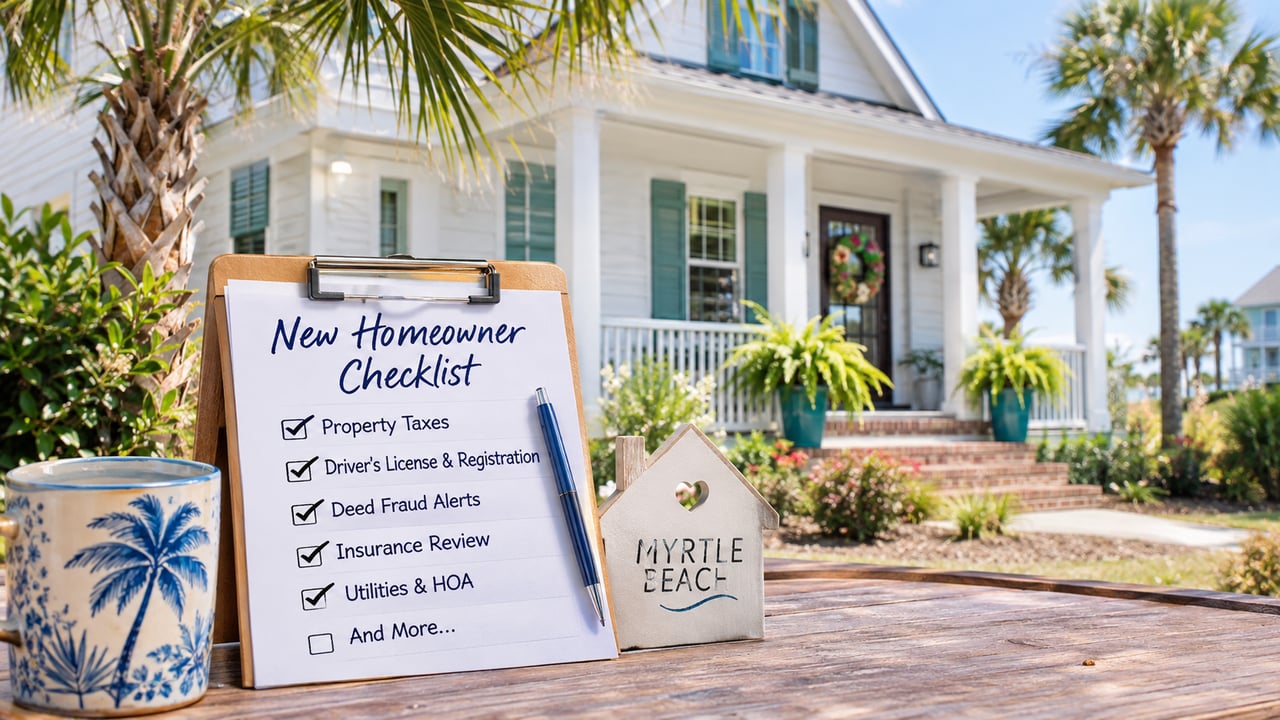
From property tax savings to paperwork most buyers overlook, here's what to take care of after getting the keys to your coastal home.

Taxes, Fees and Rules
How South Carolina's 25% ATI exemption could lower property taxes on qualifying second homes and investment properties along the Grand Strand.

Taxes, Fees and Rules
A new sales tax begins May 2027, with property tax credits planned for homeowners, second-home owners, and other property taxpayers across Georgetown County.
Taxes, Fees and Rules
How to protect your coastal property with free deed monitoring alerts in Horry and Georgetown Counties before a costly surprise catches you off guard.
Taxes, Fees and Rules
How one simple application could save Myrtle Beach homeowners thousands in property taxes each year.
From buying and selling to real estate investing, Megan Parker delivers trusted guidance, local market expertise, and personalized solutions tailored to your goals. Her client-focused approach ensures a smooth, successful experience at every stage of your real estate journey.