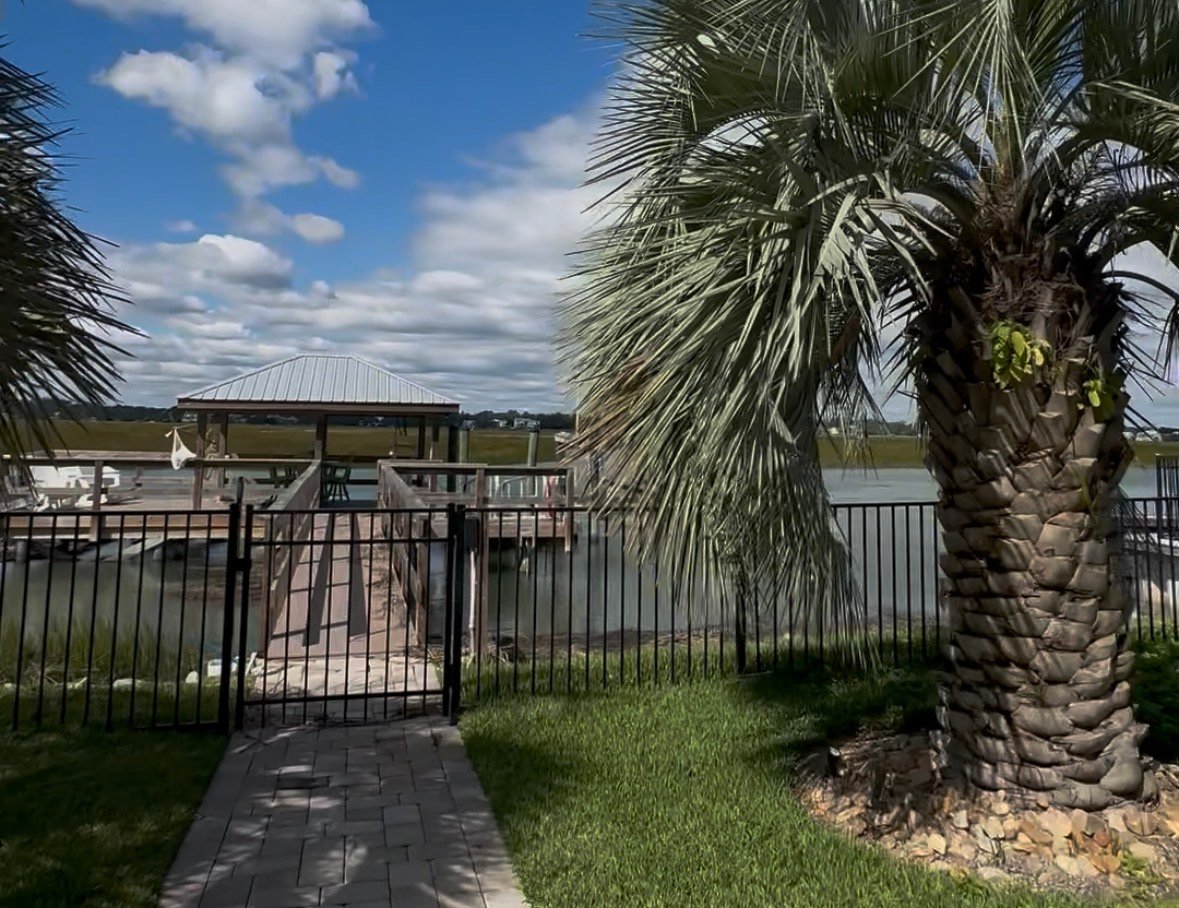
In Murrells Inlet, the Dock in the Photo Isn't Always Part of the Deal
September 17, 2026
September 17, 2026
Two houses on the same creek, half a mile apart. Same weathered gray boards, same pier head catching the afternoon light, same price bracket. In the listing photos they are nearly interchangeable. Ask each seller for the permit number on file with the state and you get two very different conversations. One hands it over without hesitation. The other pauses, calls a contractor from years ago, and eventually admits nobody is quite sure.
That pause is the whole story. A dock in Murrells Inlet is not primarily a structure you buy. It is a permit attached to a specific parcel, and permits do not always follow the sale the way buyers assume they do.
Every private dock over tidal water in South Carolina answers to the state's Bureau of Coastal Management, the office that used to operate under the name OCRM before a 2024 restructuring folded it into the newer Department of Environmental Services. The permit that authorizes a dock is not a blanket approval to build something on the water. It is tied to the creek at that exact location, and the creek dictates what is allowed.
The rules are more specific than most buyers expect:
None of this shows up in a listing description. A creek that looks generous from the yard can be legally too narrow for the dock a buyer is picturing.
Here is the part that catches people mid-transaction. Critical area permits are not automatically reassigned when a deed changes hands. The state's own permitting office treats amendments, extensions, and transfers as a distinct category of review, separate from the original approval. If a permit was never formally transferred from a previous owner, the dock standing in the yard right now is, on paper, still authorized to someone who no longer owns the house.
There is a second wrinkle few buyers know to ask about. When someone applies for a dock permit, the state requires them to submit their neighbors' mailing addresses so a public notice can go out. That process exists because a dock affects sightlines and access on a shared creek, not just the applicant's own property line. It also means a dock's history is documented and traceable, which is good news for a buyer willing to ask the right question before closing rather than after.
A weathered gray dock in a listing photo tells you nothing about whether it's legally tied to the name on the new deed.
An unresolved transfer rarely stops a closing outright. It does mean the next owner inherits a piece of paperwork that should have moved with the sale and didn't, and that gap tends to surface at the worst possible moment: when a storm damages the dock and the rebuild requires a clean permit history to move quickly.
Permitting is only half the picture in Murrells Inlet right now. The other half is happening in the creeks themselves.
In February 2026, Georgetown County Council chair Clint Elliott and other local officials began pushing South Carolina's two U.S. senators to help move a stalled federal permit that would let the county dredge more than 16 miles of creeks and channels throughout Murrells Inlet. The county first started planning the project in 2019 and applied to the Army Corps of Engineers in 2023 to remove more than 750,000 cubic yards of silt, with the material slated for a nearshore disposal site off Huntington Beach State Park. Local frustration has grown loud enough that officials have said openly the permit is already a year overdue.
Part of the holdup involves the jetty that stabilizes the north side of the inlet's entrance. Officials on the county's beachfront management committee have pointed out that the weirs built into that jetty sit too low to do their job, letting sand migrate into the inlet instead of staying on the beach where it was designed to accumulate. Every grain of sand that drifts inward instead of outward adds to the same shoaling problem the dredging project is meant to fix.
None of this changes whether a given dock is permitted. It does mean that on some creeks and canals throughout Murrells Inlet, usable depth at low tide has been quietly shrinking while a federal fix sits in a queue with no confirmed timeline. A dock that looks perfectly functional in July, at high tide, on a calm day, is not the same question as whether a boat can clear the bottom on a low-tide morning in a canal that has not been dredged in years. Asking a seller when a specific creek segment was last dredged, or whether they have noticed the bottom coming up, belongs on the same list of questions as the permit number itself.
If a dock does not exist yet, or an existing one needs to be replaced rather than repaired, marine contractors who build regularly along the Grand Strand generally quote around 120 days from application to permit in hand for a standard private residential dock. That is not a contractor's schedule. That is the state review process, and it runs on its own timeline regardless of how fast a buyer wants to be out on the water. Any construction over $5,000 also has to go through a licensed marine contractor by law, which rules out a quick weekend fix if a structure needs real rebuilding rather than routine maintenance.
For a buyer picturing a boat in the water by early summer, a permit that has not been transferred, or a dock that turns out to be undersized for its creek and due for removal, can turn a simple closing into a season spent waiting on paperwork instead of using the property.
This is also a reasonable moment to ask for that paperwork before you write an offer, not after.
Over the three months ending in June 2026, homes in Murrells Inlet sold at a median price of about $495,000, up 7 percent from the same period a year earlier, at roughly $255 a square foot, with the typical home taking about 90 days to sell compared with 107 days the year before. Meanwhile, a mid-August 2026 snapshot of active listings put the median list price closer to $599,900 across 201 properties on the market, with an average of 79 days on market and a slight monthly pullback in asking prices.
That gap between what sellers are asking and what buyers are actually paying is worth sitting with. Earlier in the spring, homes across Murrells Inlet were closing at just over 98 percent of list price on average, a sign that sellers still have some pricing power but not enough to skip negotiation. Inventory has also been running around eight months of supply, which favors buyers who are willing to ask for specifics rather than take a listing at face value.
In a market with that much room, requesting the recorded permit number, proof of transfer, and any Dock Master Plan documentation as part of due diligence is a reasonable ask, not a deal-breaking one. Sellers with clean paperwork can usually produce it within days.
Does an unpermitted dock still add value at appraisal? An appraiser can note a structure exists, but a dock without a clean, transferable permit carries real risk that a buyer should weigh against any value it seems to add.
What if I want to build a new dock on a lot that doesn't have one? Start with the creek width and the property's frontage before assuming a dock is possible at all. Some creeks in Murrells Inlet simply do not qualify, regardless of how the property looks in person.
Can I just repair an existing dock without a new permit? Routine repair generally does not require a new permit, but any modification beyond what was originally approved does, and it is worth confirming exactly what the existing permit covers before assuming a repair counts as maintenance rather than a change.
If you are looking at a waterfront property in Murrells Inlet and want someone to help you ask these questions before you are three weeks into a contract, Megan Parker would love to walk the dock with you first. Let's Connect.


Events
From buying and selling to real estate investing, Megan Parker delivers trusted guidance, local market expertise, and personalized solutions tailored to your goals. Her client-focused approach ensures a smooth, successful experience at every stage of your real estate journey.