Most "Pawleys Island" Listings Aren't Actually on Pawleys Island
September 24, 2026
September 24, 2026
Why does a four-mile strip of sand with maybe a few dozen houses generate hundreds of active listings a year under its own name?
It doesn't. What gets tagged "Pawleys Island" in a real estate search is almost always something else: a gated golf community, a new-construction subdivision, an Intracoastal-facing development a fifteen-minute drive from the causeway. The actual barrier island, the one everyone pictures when they hear the name, barely changes hands. Understanding why matters more than any median price you'll find, because that median is measuring a market the island itself barely participates in.
In late August 2026, a man named Kirkman Finlay stood in front of the Pawleys Island Board of Zoning Appeals asking for something that sounds simple and isn't: permission to split a piece of family property so a 1939 beach house wouldn't have to come down.
Finlay and his sister bought the place, known as the Gibbes Cottage, in 2020. It sits on 1.75 acres in the middle of the island, the last of what was originally three lots Caroline Gibbes purchased in 1938 for $3,600. Erosion in the late 1940s and early 1950s forced an earlier move of the house away from the beach, and that near-loss is part of what pushed the town toward its current architectural guidelines, adopted in 2021. Finlay had already pulled a demolition permit at one point. His reasoning, in his own words at the hearing, was blunt: "I need to know I'm not going to have the rug pulled out from under me."
That sentence is the whole story of buying or building on the actual island. The town's Architectural Review Board doesn't rubber-stamp replacement houses. It measures them against a standard locals call the "Pawleys look," and in February 2026 it proved that standard has teeth by rejecting a design outright for the first time since the 2021 guidelines took effect. That case involved a different property, a 1940s house called Port Arthur sharing a lot with a 19th-century home called Liberty Lodge that's listed on the National Register. The zoning board had already agreed the new house could have a footprint of 1,425 square feet, about 50 percent larger than the original structure, which is how the owners ended up cleared to build a 2,183-square-foot home. But when the actual design came before the review board, member Frank Robinson raised concerns about the square footage and changes, and chair Ken Leach agreed the concerns were shared. The design got sent back.
None of this is paperwork for paperwork's sake. It's the mechanism that decides how much of the island's housing stock can actually turn over, and how slowly.
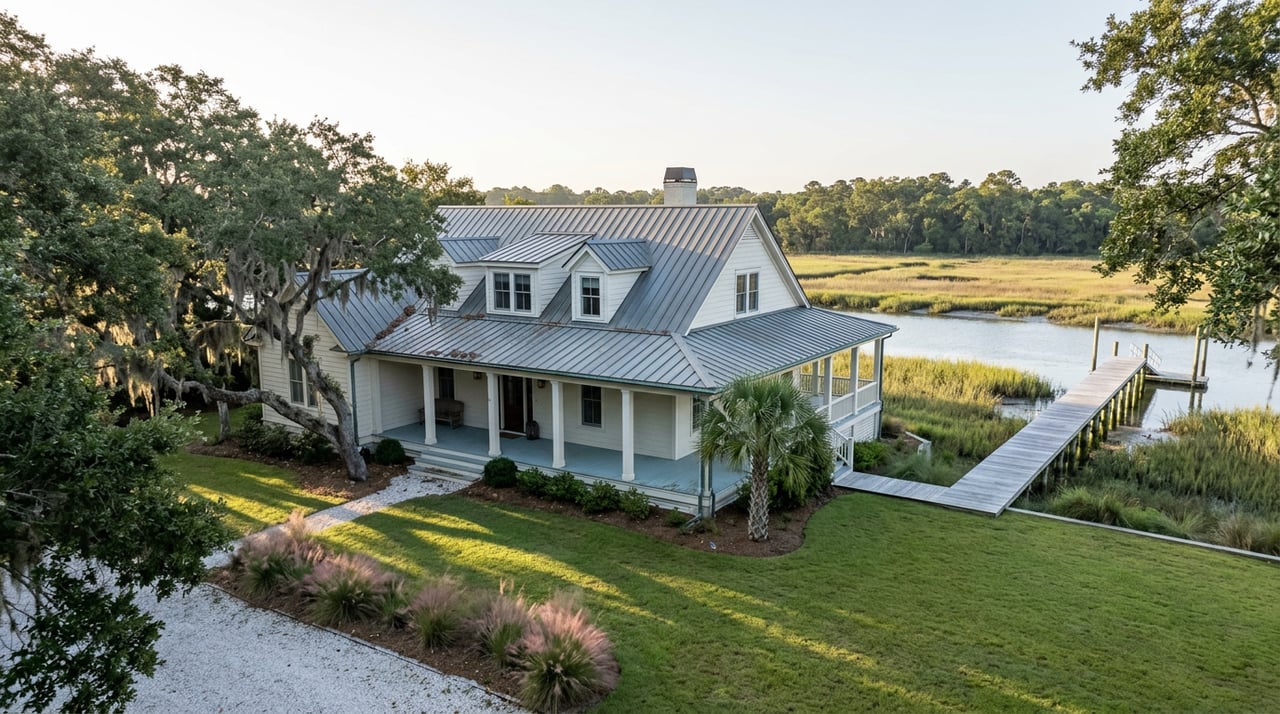
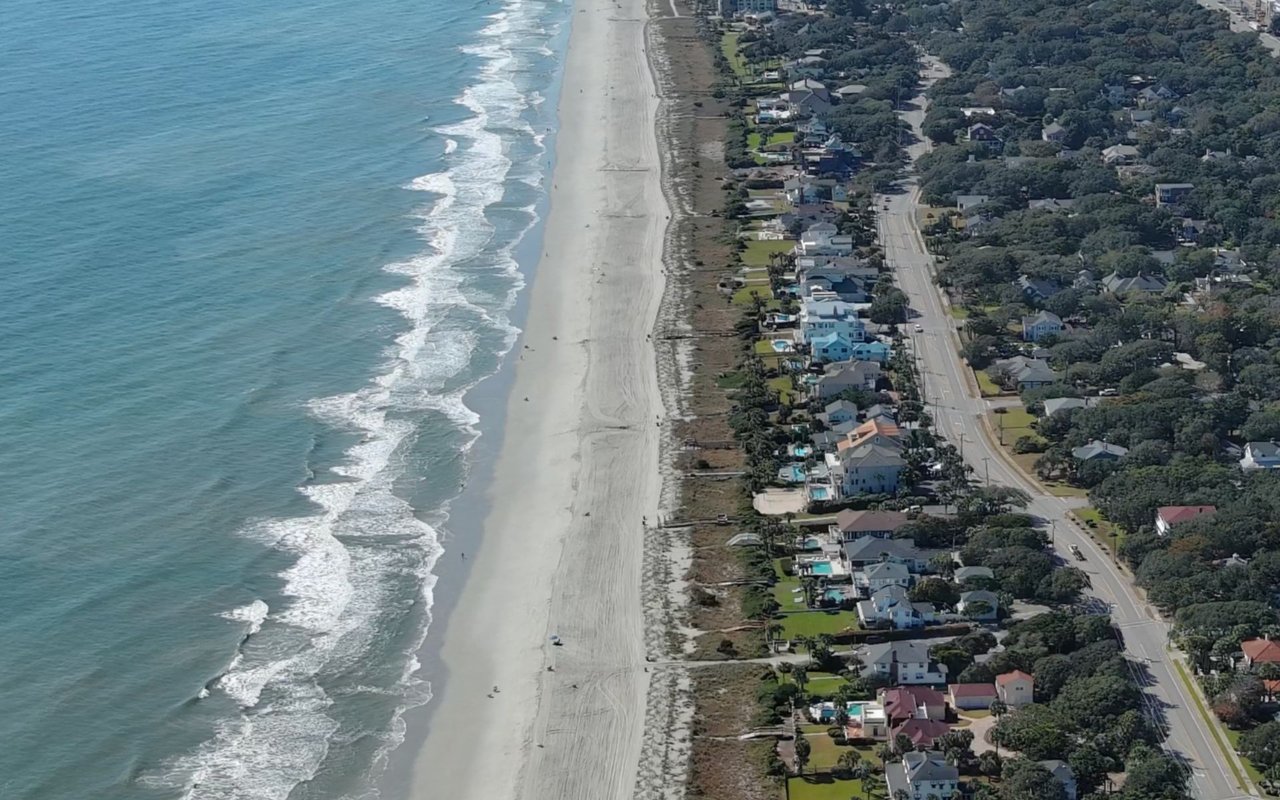
Pawleys Island proper sits across two causeways, part of a historic district added to the National Register in 1972, with nine individual homes still carrying that designation today. It's a narrow strip where a house that burns or rots doesn't automatically get replaced with whatever the owner wants. It gets replaced with whatever the Architectural Review Board decides fits.
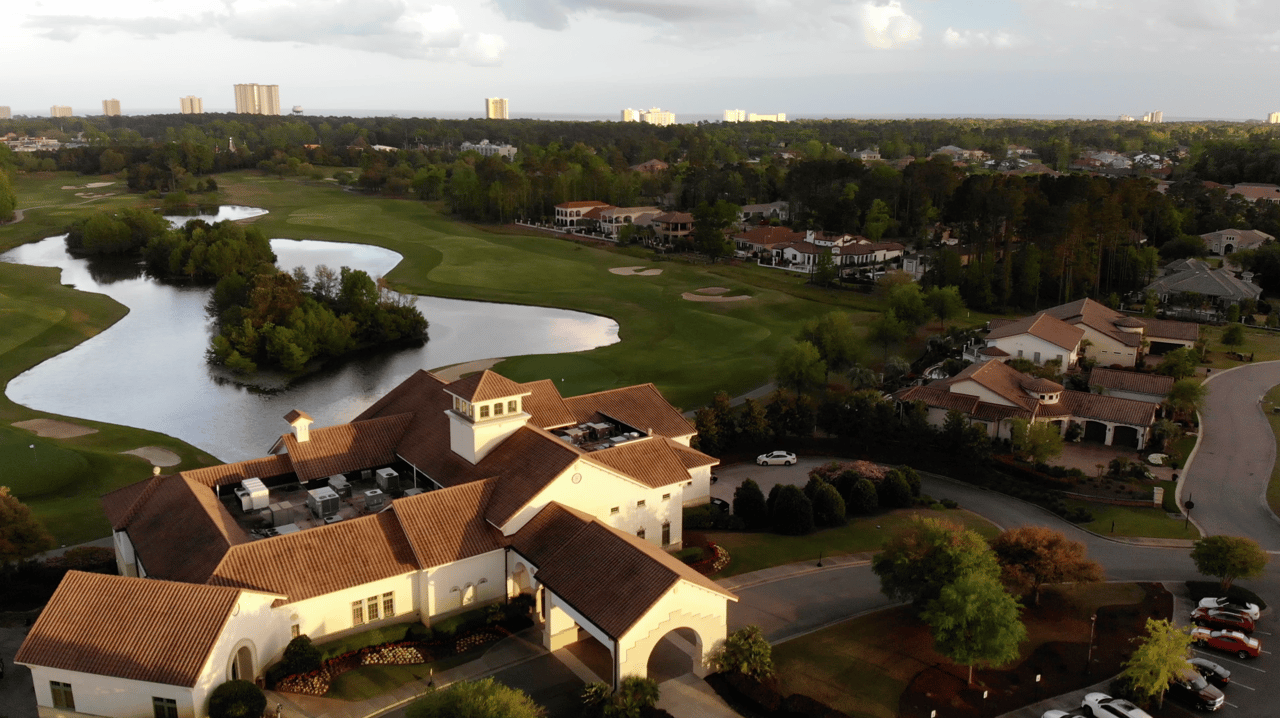
The zip code that shares its name, 29585, is a different animal. Scroll through what's actively listed there this month and the pattern holds: a home in the Parkland community, described plainly in its own listing as sitting "in the heart of Pawleys mainland," built on a D.R. Horton floor plan. A property in Heritage Plantation, a gated Intracoastal Waterway community with a private marina, golf course, and clubhouse overlooking old rice fields. Golf-course product tied to True Blue and Caledonia. New construction in Cypress Point. These are legitimate, well-built communities and genuinely part of the broader Pawleys Island area. They are also nothing like the island itself.
| The Historic Island | The Mainland (29585) | |
|---|---|---|
| Typical housing stock | Cypress-sided cottages, some pre-1970s, a handful antebellum | New construction and gated communities built from the 1990s to present |
| How often it sells | Rarely, often generational transfer | Regularly, standard resale and new-build inventory |
| Design oversight | Town Architectural Review Board, guidelines since 2021 | Standard HOA architectural committees, no town-level review |
| A recent example | The Gibbes Cottage variance hearing, August 2026 | Active listings in Heritage Plantation and Parkland, 2026 |
A feature in The Post and Courier put a number on just how tight the island's supply had gotten. Seven years earlier, there had been 52 properties for sale on the island itself. By the first week of July that year, there were four. One longtime Pawleys Island sales agent quoted in the piece described what makes those transactions different from an ordinary resale: "It's a very emotional sale for a homeowner here."
That scarcity has not shown signs of reversing. As of September 2026, the median list price across zip code 29585 sits around $549,000, at roughly $289 per square foot, figures pulled from a broad mix of golf-course homes, ICW-facing gated communities, and mainland new construction. Almost none of it reflects the historic island parcels, most of which simply never enter that pool of active listings in the first place. If your actual goal is a house behind those two causeways, that median tells you very little about what you're up against, because it's averaging in hundreds of sales that have nothing to do with island scarcity.
A few things follow from all of this if you're set on the sand-and-marsh strip itself rather than the surrounding zip code:
None of this makes the mainland side of 29585 a lesser choice. A gated community on the Intracoastal with a marina and a golf course is a real and comfortable version of Grand Strand living, and for a lot of buyers it's the better fit anyway, especially if low-maintenance construction and predictable HOA rules matter more than a 1938 cottage's history. The point isn't that one market beats the other. It's that they're not the same market, and pricing or inventory data pulled under one zip code will mislead you if you don't know which side of the marsh you're actually shopping.
Does this mean it's basically impossible to buy on the actual island? Not impossible, but expect patience. Inventory is thin enough that timing often depends on family estate decisions rather than a predictable listing calendar.
Are island homes automatically more expensive than mainland homes in 29585? There isn't enough turnover to make that comparison reliably. So few island properties sell in a given year that a single sale can skew any average far more than it would in a normal market.
Does the Architectural Review Board apply to every renovation, or just teardowns and new construction? Based on the cases the town has taken up publicly, the board's most active role is reviewing new construction and replacement structures, particularly where a historic or pre-guideline house is involved. Anyone planning work on an island property should confirm directly with the town what level of review applies before assuming a renovation is routine.
Is a golf-course or gated-community home in 29585 still a legitimate "Pawleys Island" property? Yes. It's simply a different product built to a different set of rules, and for many buyers it's the more practical choice.
If you're trying to figure out which side of that distinction actually fits the life you're building, that's the conversation worth having before you start comparing listings. Megan Parker has spent years walking Grand Strand buyers through exactly this kind of local nuance. Let's Connect.

Events
From buying and selling to real estate investing, Megan Parker delivers trusted guidance, local market expertise, and personalized solutions tailored to your goals. Her client-focused approach ensures a smooth, successful experience at every stage of your real estate journey.